
DoS vs DDoS Attacks Differences, Types and Prevention
A sudden surge of overwhelming network traffic can instantly paralyze any website or online service. This is the exact mechanism behind a dos and ddos attack, a persistent cyber threat designed to exhaust server resources and block regular users from connecting. Knowing how attackers exploit network protocols is essential for building strong digital defenses. Join Axclusive ISP in this article as we break down the most popular attack methods.
Strengthen your network resilience against disruptive attacks with Axclusive ISP. Discover our DDoS Protection solution.
Key Differences Between DoS and DDoS Attacks
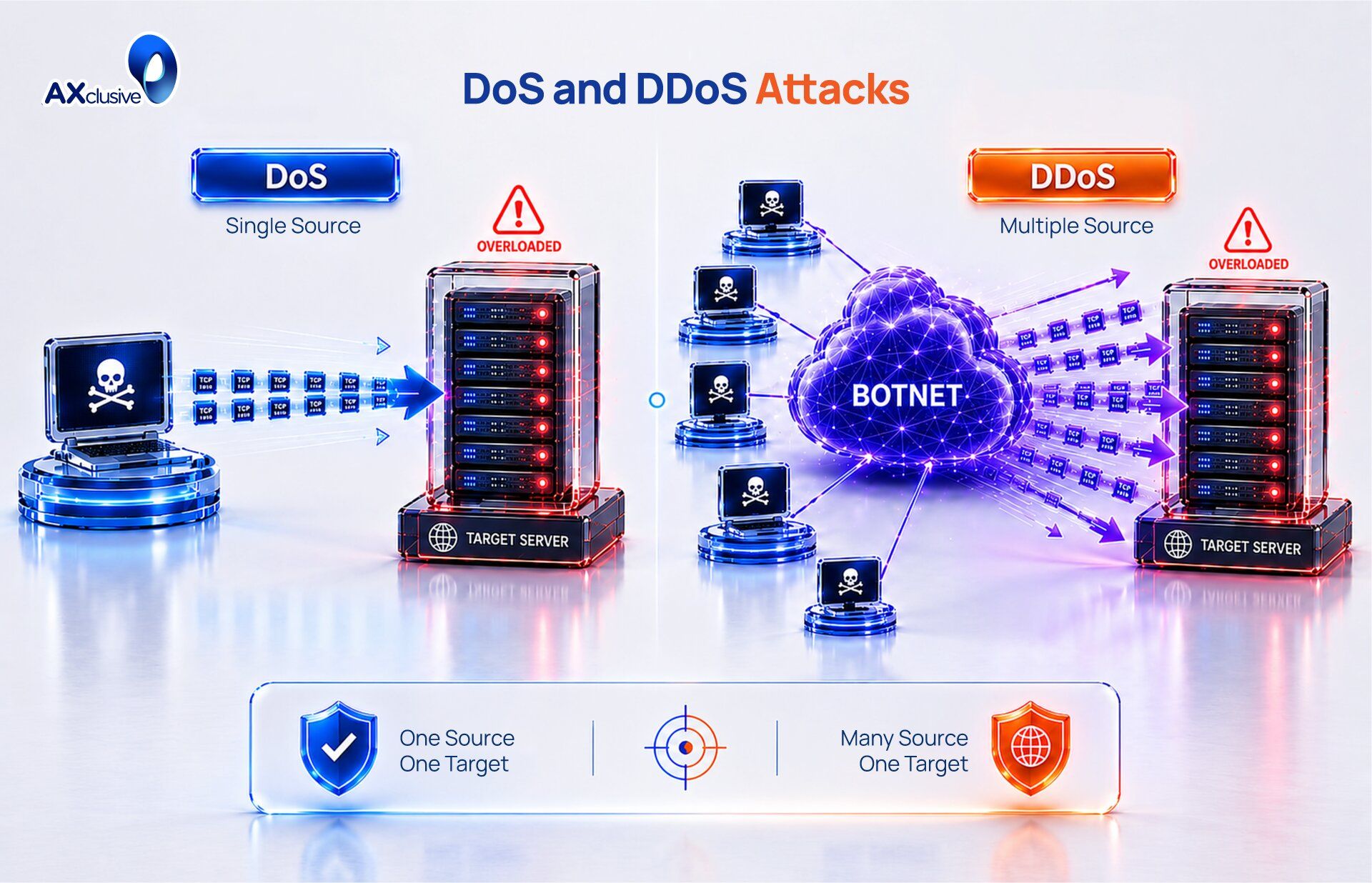
DoS and DDoS attacks are cyberattacks designed to overwhelm a server, network, or online service with excessive traffic or requests, preventing legitimate users from accessing it. The main difference is the number of systems involved. A DoS attack typically originates from a single source, while a DDoS attack distributes malicious traffic across multiple devices or systems.
Although both attacks aim to disrupt service availability, they differ significantly in scale, traffic distribution, detection, and mitigation.
Number of Attack Sources
A DoS attack generally sends malicious traffic from one system toward the target. A DDoS attack uses many distributed devices simultaneously, allowing traffic to reach the target from numerous locations.
Attack Traffic Volume
Because DDoS attacks can involve a large number of connected devices, they are capable of generating significantly higher traffic volumes. This can place greater pressure on network bandwidth, servers, and applications.
Detection and Mitigation
Traffic from a single-source DoS attack can be easier to identify and filter once the source is detected. DDoS traffic is more challenging because malicious requests may originate from many different IP addresses and can sometimes resemble legitimate user activity.
Attack Infrastructure
DoS attacks can be launched from an individual system using specific tools or scripts. DDoS attacks commonly rely on a distributed network of compromised devices, often known as a botnet, to coordinate traffic against the same target.
Source Identification
Identifying the origin of a DoS attack is generally more straightforward because traffic comes from a limited source. With DDoS attacks, distributed traffic and compromised devices make tracing the responsible attacker considerably more difficult.
Potential Impact
Both attacks can cause website slowdowns, service interruptions, and resource exhaustion. However, the distributed nature of DDoS attacks allows them to operate at a much larger scale, potentially affecting network availability and multiple services simultaneously.
Common Types of DoS and DDoS Attacks
DoS and DDoS attacks can use different techniques to exhaust network bandwidth, consume system resources, or overload applications. Understanding the most common attack types helps organizations identify how an attack affects infrastructure and choose an appropriate mitigation strategy. One common example is an HTTP Flood DDoS Attack, which overwhelms web servers or applications with a large volume of HTTP requests.
Teardrop Attacks
A teardrop attack sends deliberately malformed or overlapping IP fragments to a target. When the receiving system attempts to reconstruct these fragments into complete packets, the inconsistent information can consume resources or cause processing errors.
Connection Flood Attacks
A connection flood attack generates large numbers of connection requests without properly completing the communication process. As unfinished connections accumulate, available server resources can become exhausted, preventing legitimate users from establishing new connections.
IP Fragmentation Attacks
An IP fragmentation attack uses improperly formed or manipulated packet fragments to place additional processing demands on the target. Repeated attempts to process or reassemble these packets can degrade network performance and consume system resources.
Volumetric DDoS Attacks
Volumetric attacks attempt to overwhelm the available bandwidth of a network or service with extremely large amounts of traffic. Distributed devices can generate traffic simultaneously, creating congestion that slows down or prevents legitimate connections from reaching the target.
Protocol-Based Attacks
Protocol attacks target weaknesses or resource limitations in network protocols, particularly at Layers 3 and 4. Instead of relying only on traffic volume, these attacks can consume resources in servers, firewalls, load balancers, and other network infrastructure.
Application-Layer Attacks
Application-layer DDoS attacks target services operating at Layer 7, such as websites, APIs, and web applications. Attackers generate requests designed to consume application resources and make the service unavailable. Because this traffic can resemble normal user behavior, application-layer attacks may be more difficult to identify using basic traffic filtering alone.
How to Prevent DoS and DDoS Attacks
Protecting a network from DoS and DDoS attacks requires multiple layers of defense. Organizations should combine continuous monitoring, traffic controls, resilient infrastructure, and dedicated security solutions to identify and mitigate attacks before they disrupt critical services.
Monitor Network Traffic for Unusual Activity
Continuously monitor traffic patterns to establish normal network behavior. Sudden increases in requests, unusual traffic sources, or unexpected connection patterns can provide early indications of an attack.
Control Excessive Requests with Rate Limiting
Rate limiting restricts how frequently users or systems can send requests within a specific period. This can reduce the impact of request floods while allowing normal users to continue accessing services.
Filter Suspicious IP Traffic
Organizations can use filtering rules to restrict traffic from IP addresses associated with malicious activity. Allow lists can also be applied to sensitive systems where access should be limited to known and trusted sources.
Build a Resilient and Distributed Network
Load balancing, redundant servers, and failover infrastructure help distribute traffic and reduce dependence on a single system. CDNs can further distribute content and traffic across multiple locations, reducing pressure on the origin server during an attack.
Keep Systems and Network Devices Updated
Regularly patch operating systems, applications, servers, routers, and other network components. Keeping infrastructure current reduces vulnerabilities that attackers may exploit as part of broader network attacks.
Strengthen IoT and Connected Device Security
IoT devices should use strong authentication, current firmware, and appropriate security controls. Network segmentation can further isolate these devices and limit the potential impact if one becomes compromised.
Use Dedicated DDoS Protection
Dedicated DDoS protection can detect and filter malicious traffic before it reaches critical infrastructure. Advanced mitigation solutions can analyze traffic in real time, absorb large attack volumes, and help maintain service availability during an active DDoS attack.
Dealing with cyber threats can feel overwhelming, but understanding how a dos and ddos attack actually works is a huge step in the right direction. From basic traffic floods to complex botnet strikes, knowing the tactics hackers use helps you prepare better network defenses. Remember, you do not have to navigate these technical challenges alone.Axclusive ISP is always here to help you understand your digital environment and keep your daily connections running smoothly.
DoS and DDoS attacks can disrupt network availability and critical online services. Contact us to strengthen your network protection with Axclusive ISP.