
What Is Local Internet Breakout and How Does It Work
Traditional enterprise networks are struggling to handle the massive traffic generated by modern cloud applications. To solve this bottleneck, IT leaders are turning to Local Internet Breakout. This routing technique allows branch locations to securely access the web directly, completely bypassing the slow and expensive central corporate network. Join Axclusive ISP in the article below to learn the key benefits and security challenges of this essential network upgrade.
Why Local Internet Breakout Matters for Modern Networks
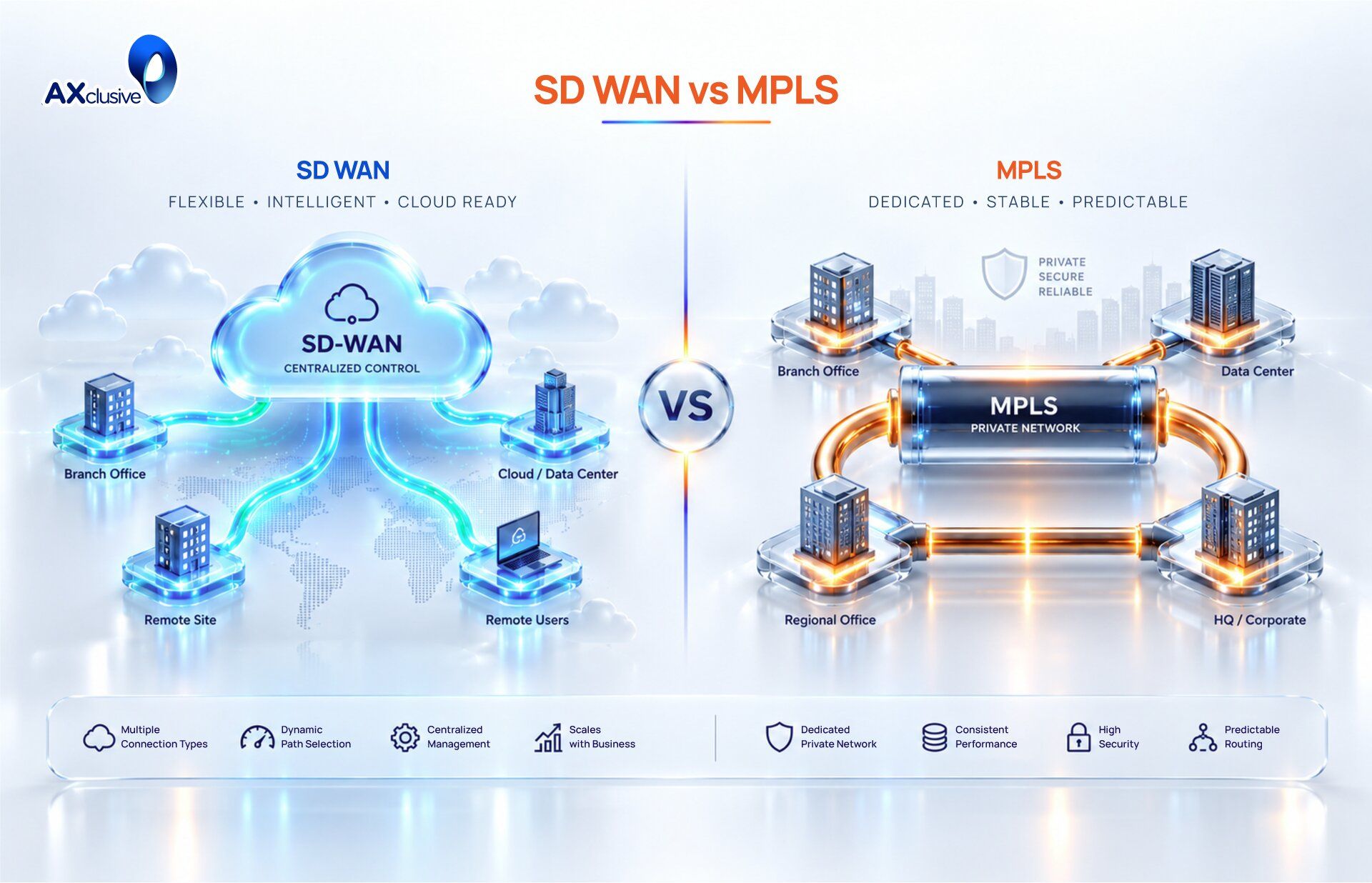
Historically, large organizations relied on a strict hub and spoke network architecture. In this older model, all digital traffic from remote branches had to travel over expensive private lines back to a central corporate data center. Once there, the data passed through heavy security appliances before finally reaching the public internet.
Today, this traditional approach is highly inefficient. The primary reason local internet breakout has become essential is the massive shift toward cloud computing. Because modern business tools like Microsoft 365 or Salesforce are designed for direct internet access, forcing that traffic through a central hub creates major problems:
- Severe Traffic Congestion: The vast majority of modern enterprise bandwidth is consumed by cloud applications, causing centralized data centers to quickly become overwhelmed.
- Increased Application Latency: Routing data miles out of its way (known as backhauling) creates significant delays, leading to very slow application performance and a frustrating user experience.
- Wasted Financial Resources: Paying for premium private networks just to send basic web traffic back to a headquarters is an unnecessary and massive expense.
To solve these issues, IT leaders now use local breakout strategies combined with SD WAN technology. This modern approach allows branch offices to bypass the central data center entirely and securely access the internet directly from their local location.
How Local Internet Breakout Works
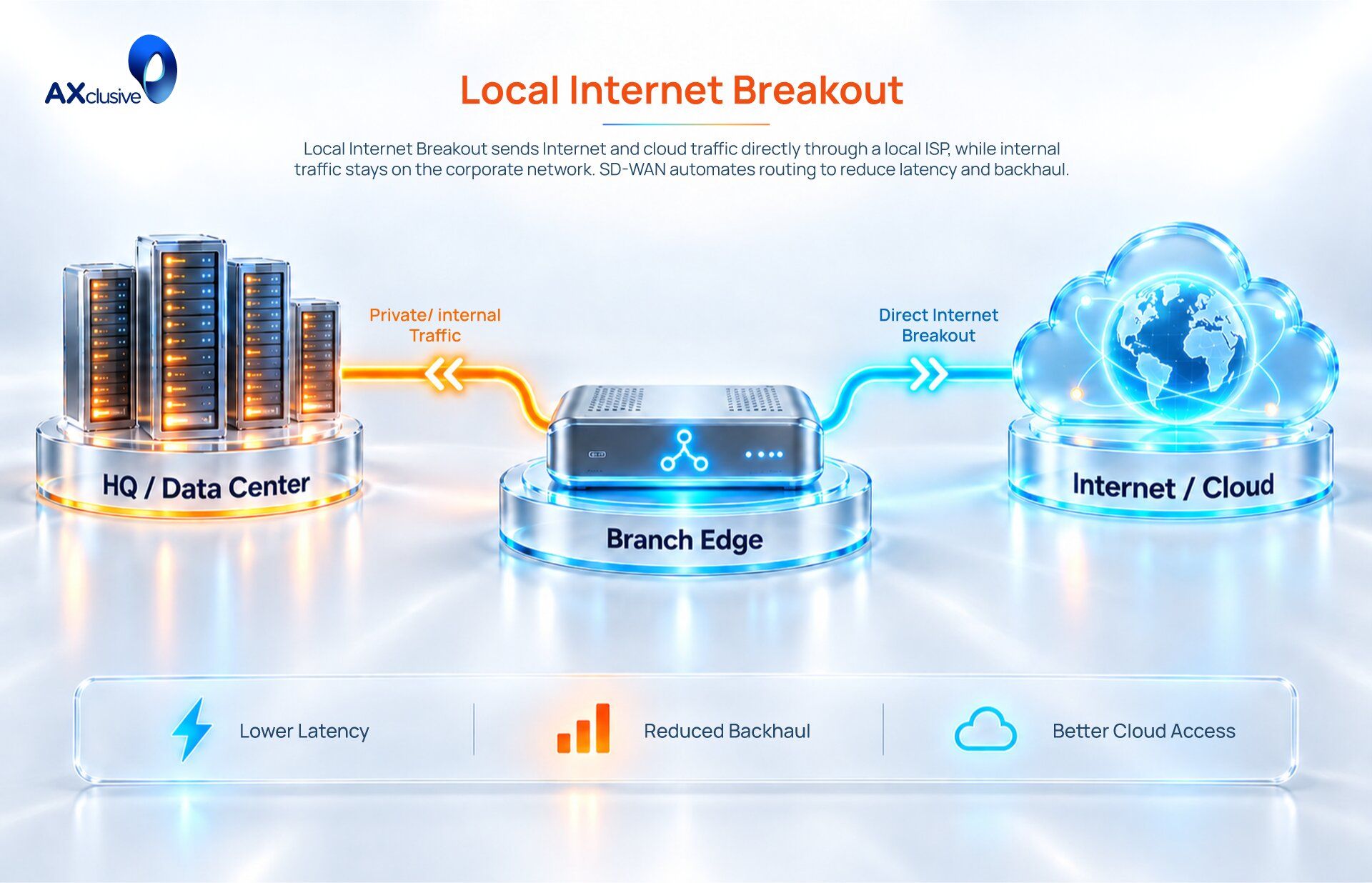
Local internet breakout fundamentally changes network routing by allowing remote branch offices to send cloud bound traffic directly to a local Internet Service Provider. Instead of forcing everyday web traffic through an expensive central corporate network, this strategy uses lower cost local connections to immediately access the internet. This direct routing drastically reduces the burden on the main headquarters while preserving premium private bandwidth for critical internal applications that still live in the corporate data center.
To make this complex routing happen seamlessly, organizations rely on software defined wide area network technology. This intelligent overlay system constantly analyzes network performance and automatically selects the fastest, most reliable path for every piece of data leaving the branch. Through a centralized cloud dashboard, IT administrators can effortlessly push software defined policies to hundreds of global locations at once. This centralized control ensures that traffic is always routed efficiently without requiring manual configuration at every single physical office.
Key Challenges of Local Internet Breakout
While bypassing the central data center vastly improves application speeds, it introduces significant cybersecurity and logistical hurdles. When a branch office connects directly to the internet, it loses the massive layer of protection historically provided by the headquarters.
Organizations attempting to implement this strategy often struggle with the following challenges:
- Massive Security Replication Costs: To keep branch offices secure, companies theoretically need to place physical firewalls, intrusion prevention systems, and threat sandboxes at every single location. Buying, shipping, and maintaining this hardware globally is financially and operationally impossible for most businesses.
- Hardware Performance Limitations: Next generation firewalls were built for traditional networks, not the massive volume of constant connections generated by modern cloud applications. When forced to process heavy cloud traffic, these physical appliances quickly become overwhelmed, destroying the fast user experience the breakout was supposed to provide.
- Encrypted Traffic Blind Spots: Today, the vast majority of web traffic is encrypted using SSL. Traditional security appliances struggle to inspect encrypted data natively. When they attempt to decrypt and scan this traffic using software workarounds, performance drops severely, leading to crippling network slowdowns.
Business Benefits of Local Internet Breakout
To safely bypass the corporate data center without buying expensive branch hardware, modern enterprises pair this routing strategy with a fully cloud based security model. When applications and security both reside in the cloud, businesses unlock several massive operational advantages.
By securing direct branch connections through a cloud platform, organizations experience the following benefits:
- Lightning Fast User Experience: By avoiding the long trip back to a central headquarters, employees get immediate, low latency access to their daily cloud applications, making their digital workflows incredibly fast and responsive.
- Massive Cost Reductions: Organizations can drastically reduce their spending on expensive private network lines. Furthermore, using cloud security eliminates the massive capital expense of purchasing, shipping, and maintaining physical firewall appliances at every branch location.
- Simplified IT Operations: Managing network policies becomes effortless. Through a single centralized cloud dashboard, IT teams can instantly apply security rules, prioritize critical business applications, and manage hundreds of branch locations with just a few clicks.
- Universal Protection: A cloud driven approach ensures that the exact same level of enterprise security follows the user everywhere. Whether an employee is working from a remote branch, the main corporate office, or a local coffee shop, their direct internet connection remains completely secure.
Local Internet Breakout Advantages and Disadvantages
Deciding to route traffic directly to the public web from a branch office is a strategic trade off. While it drastically improves certain network metrics, it also removes traffic from the highly controlled corporate tunnel.
Below is a clear comparison of the key pros and cons associated with this routing approach:
| Advantages (Pros) | Disadvantages (Cons) |
| Optimized Core Bandwidth: Diverting basic web traffic away from your primary private tunnels frees up massive amounts of bandwidth and processing power for critical internal company data. | Loss of Routing Optimization: Once traffic leaves your controlled overlay network, it can no longer benefit from the advanced performance enhancements and reliability features built into your corporate tunnels. |
| Reduced Usage Costs: If your enterprise network provider charges you based on the volume of data traveling through the main corporate overlay, offloading traffic locally will significantly lower your monthly bills. | Static IP Limitations: Traffic sent directly to a local provider cannot utilize the elastic or static IP address features typically provided and managed by your central cloud relay. |
| Decreased Latency: By completely bypassing the central headquarters, users experience much faster connection speeds because their data takes the absolute shortest geographical path to its destination. | Major Security Gaps: Data sent directly to the public web bypasses your main corporate firewall. To stay safe, branches must invest in complex local security hardware or subscribe to a dedicated cloud security service. |
In conclusion, adopting a Local Internet Breakout strategy is the smartest way to optimize bandwidth and accelerate cloud application performance for your remote branches. While bypassing the central data center saves money and reduces latency, it requires a strong cloud based security setup to keep your data safe. By shifting your security to the cloud alongside your traffic, you unlock true enterprise agility. Axclusive ISP hopes this guide helps you build a faster, more efficient, and secure modern network.
Local Internet Breakout improves cloud access, reduces latency, and optimizes branch connectivity. Contact us to build a secure network solution with Axclusive ISP.