
What Is an HTTP Flood DDoS Attack? Common Types and Prevention
Defending your website from massive traffic surges requires understanding the hidden dangers of the application layer. An HTTP flood DDoS attack is a sophisticated threat designed to drain server resources by bombarding the system with endless, legitimate looking web requests. If left unprotected, this attack can cause devastating downtime. Join Axclusive ISP in the article below as we break down the different attack methods
What is an HTTP flood DDoS attack?
An HTTP flood DDoS attack is an application-layer attack that sends a large volume of HTTP requests to a website or web application, consuming server resources and disrupting its ability to handle legitimate users. Unlike attacks that primarily overwhelm network bandwidth, HTTP floods target web services by generating requests that can resemble normal user activity, making them more difficult to identify and mitigate.
How an HTTP Flood DDoS Attack Targets Web Applications
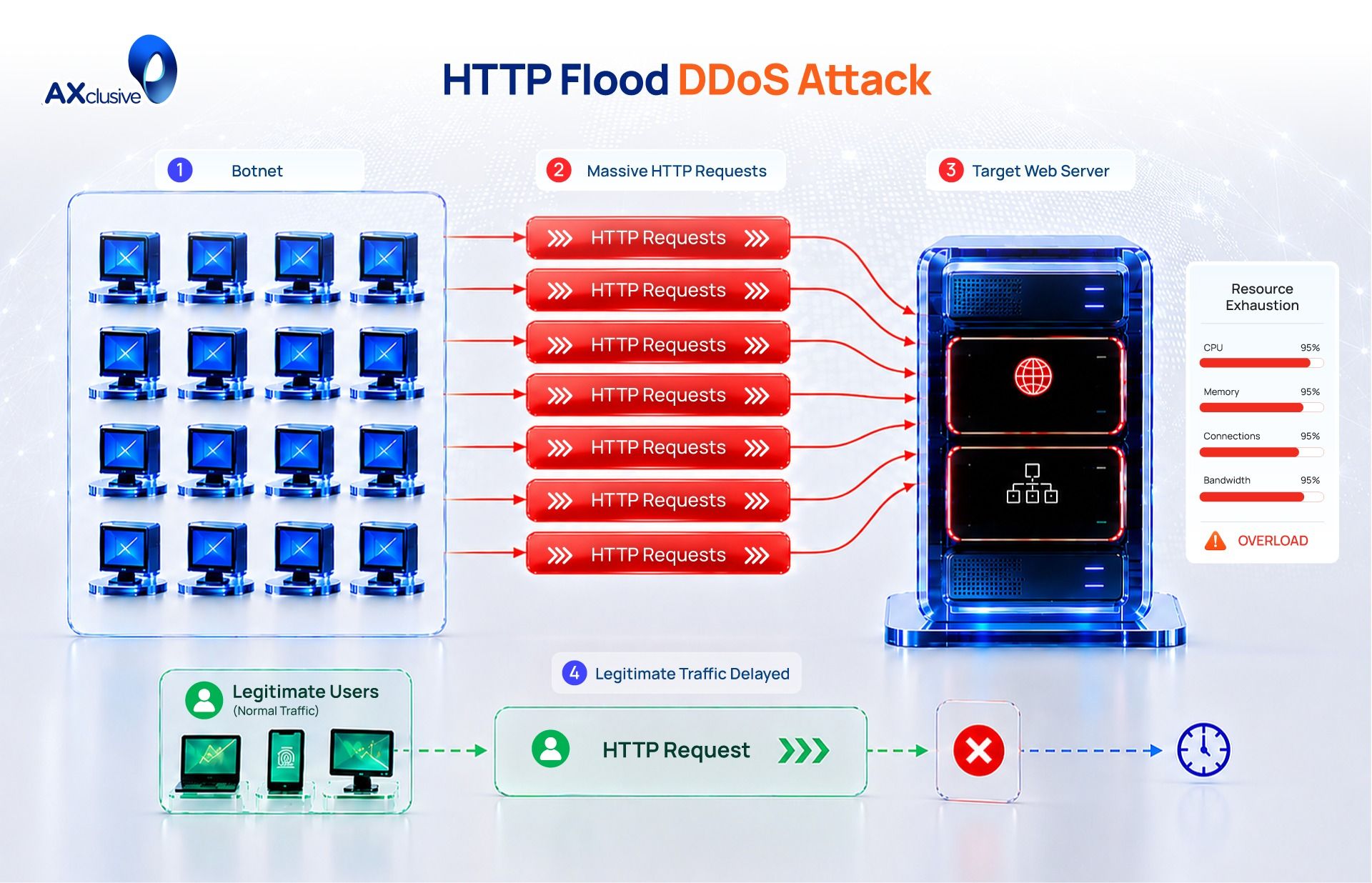
An HTTP Flood DDoS Attack targets the application layer (Layer 7) by generating large numbers of HTTP requests against a website or web application. Because these requests can look similar to legitimate browser activity, identifying and filtering malicious traffic can be more challenging than with attacks that simply consume network bandwidth.
Attackers commonly distribute requests across many compromised devices or automated clients. By sending traffic from multiple sources simultaneously, the attack can consume web server, application, or database resources until legitimate requests become slow or unavailable.
Two common request patterns associated with HTTP flood attacks include:
- HTTP GET Flood: An HTTP GET flood repeatedly requests webpages, images, files, API endpoints, or other resources from the target application. Processing a high volume of these requests can consume server capacity and prevent legitimate users from accessing the requested services.
- HTTP POST Flood: An HTTP POST flood sends large numbers of requests that require the application to process submitted data. These requests may trigger resource-intensive operations such as database queries, authentication, searches, or form processing. As server-side workloads increase, application performance can deteriorate and eventually result in service disruption.
Unlike purely volumetric attacks, an HTTP flood can create significant application load without requiring exceptionally high bandwidth. This makes effective Layer 7 traffic analysis and DDoS protection important for distinguishing legitimate users from abusive request patterns.
Key Impacts of an HTTP Flood DDoS Attack
A successful HTTP Flood DDoS Attack can affect website availability, business operations, and customer experience. Common impacts include:
- Website Downtime and Performance Issues: Excessive HTTP requests can consume application resources, resulting in slow page loads, connection errors, or complete service outages.
- Revenue and Business Losses: When websites, applications, or online services become unavailable, businesses may lose transactions, leads, and other revenue-generating opportunities.
- Poor User Experience: Slow response times and repeated errors can prevent legitimate users from accessing services, completing transactions, or interacting with applications normally.
- Increased Infrastructure Costs: Sudden traffic spikes may consume additional computing, bandwidth, and cloud resources, potentially increasing operational costs during an attack.
- Damage to Customer Trust and Brand Reputation: Frequent or prolonged service disruptions can reduce customer confidence in the reliability and availability of a company’s digital services.
Effective Ways to Prevent HTTP Flood DDoS Attacks
Organizations can reduce the risk of an HTTP Flood DDoS Attack by combining traffic monitoring, application-layer security, and resilient infrastructure. Key protection measures include:
- Monitor HTTP Traffic Patterns: Continuously monitor request volumes, response times, error rates, and unusual traffic behavior to identify potential HTTP floods before they significantly affect application performance.
- Deploy a Web Application Firewall: A WAF can inspect incoming HTTP and HTTPS requests and apply security rules to identify and block suspicious traffic before it reaches the application.
- Use DDoS Protection and Traffic Filtering: Dedicated DDoS protection can analyze incoming traffic and filter malicious requests while allowing legitimate users to continue accessing the service.
- Apply Rate Limiting: Limit the number of requests a client can send within a specific period. This can help control excessive GET, POST, API, or authentication requests.
- Use a Content Delivery Network: A CDN distributes content and traffic across multiple locations, reducing the amount of traffic that must be handled directly by the origin server.
- Build Redundant Infrastructure: Multiple servers, load balancing, and failover mechanisms can help maintain service availability when individual systems become overloaded or unavailable.
- Protect Resource-Intensive Endpoints: Apply additional controls to login pages, search functions, APIs, forms, and other endpoints that require significant server or database processing.
For modern enterprises, maintaining seamless online operations is a top priority. An HTTP flood DDoS attack threatens this stability by draining critical server resources and blocking legitimate customer access. Securing your infrastructure with a multi layered defense strategy, including a robust WAF and a global CDN, is a necessary investment for long term success. Axclusive ISP hopes the insights in this article help your technical teams build a highly resilient network architecture.
HTTP Flood DDoS attacks can disrupt websites and critical online services. Contact us to strengthen your DDoS protection with Axclusive ISP.