
What Is DDoS Mitigation? How It Works and Key Techniques
Keeping your digital infrastructure safe from traffic overload requires more than just a strong firewall. The ultimate solution lies in proactive ddos attack mitigation to filter out malicious threats and keep your services running smoothly. Join Axclusive ISP to learn more in this article.
Unexpected traffic surges shouldn’t mean downtime. Strengthen your network resilience with DDoS Protection from Axclusive ISP.
What is DDoS mitigation ?
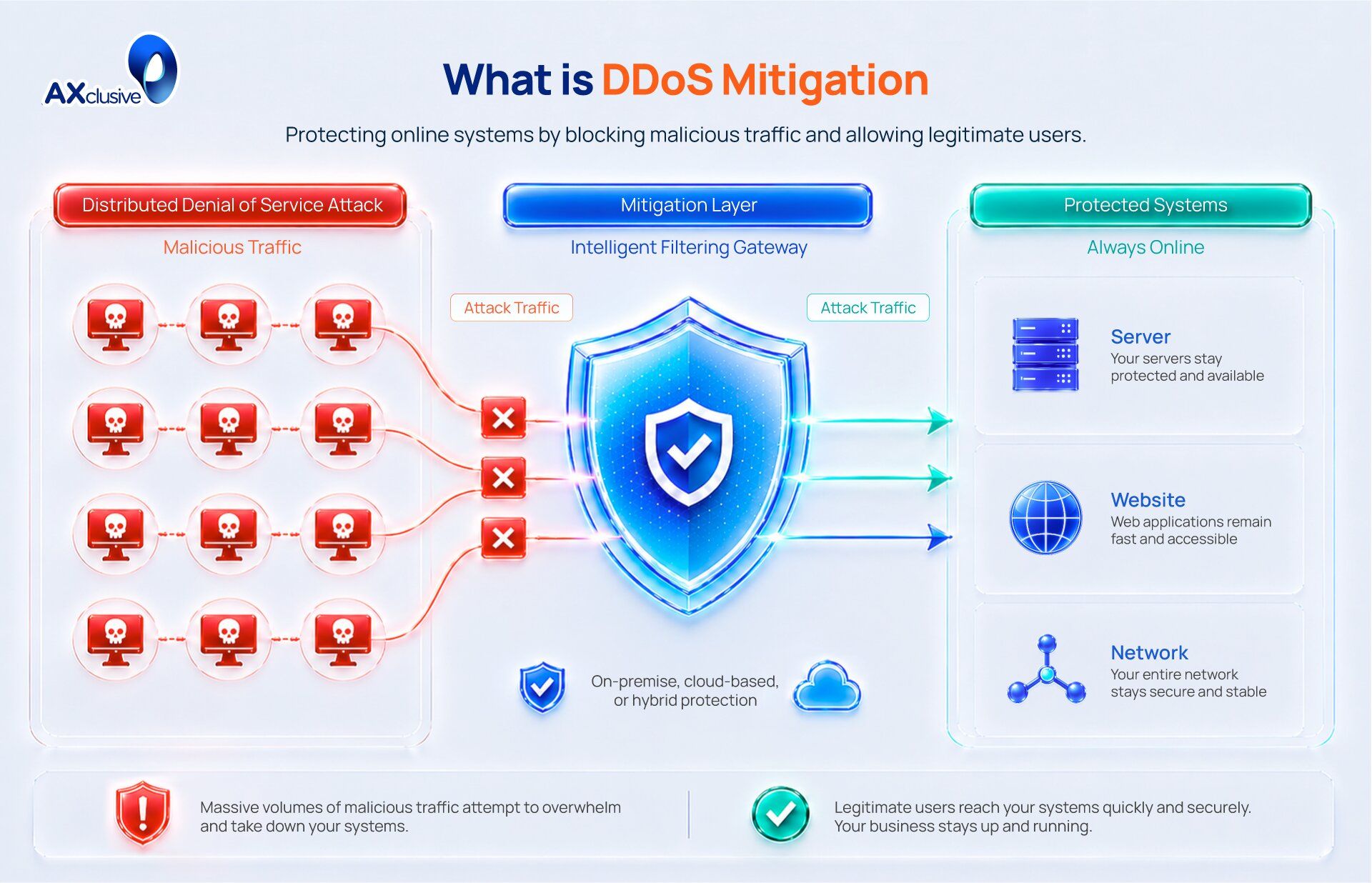
DDoS mitigation is the process of detecting, filtering, and controlling malicious traffic generated during a Distributed Denial-of-Service (DDoS) attack. Its purpose is to prevent overwhelming traffic from disrupting servers, applications, or network infrastructure while allowing legitimate users to continue accessing services. DDoS mitigation solutions typically combine traffic monitoring, attack detection, filtering, and traffic management to reduce the impact of attacks and maintain network availability.
How DDoS Mitigation Works
DDoS mitigation typically follows several stages to identify malicious traffic, protect network resources, and maintain service availability during an attack.
- Traffic Detection: The mitigation system continuously analyzes incoming traffic to identify unusual patterns and distinguish legitimate traffic spikes from potential DDoS activity.
- Traffic Filtering: Once malicious activity is identified, suspicious traffic is filtered or blocked while legitimate requests are allowed to continue reaching the protected service.
- Traffic Routing: Traffic may be redirected through DDoS protection infrastructure or scrubbing systems, where malicious packets are removed before clean traffic is forwarded to the destination.
- Continuous Adaptation: Traffic patterns and attack behavior are continuously analyzed so filtering rules and mitigation policies can be adjusted as the attack changes.
Common DDoS Mitigation Techniques
Organizations can use different DDoS mitigation techniques to detect, filter, redirect, and manage malicious traffic before it disrupts network services.
- Cloud-Based DDoS Protection: Cloud-based protection uses distributed infrastructure with large network capacity to absorb and filter attack traffic before it reaches the target. This approach can scale to handle large traffic volumes and is commonly used for protection against volumetric DDoS attacks.
- Network-Based Traffic Filtering: Routers, firewalls, and network security systems can identify suspicious traffic and apply filtering, access control, or rate-limiting policies. This helps reduce malicious traffic while allowing legitimate connections to continue.
- Blackhole Routing: Blackhole routing redirects selected traffic to a null route where packets are discarded. It can quickly reduce network congestion during a large attack, although legitimate traffic may also be affected if the routing policy is too broad.
- Sinkholing: Sinkholing redirects suspicious traffic to a controlled environment where it can be monitored and analyzed. This provides network teams with additional information about attack patterns while preventing harmful traffic from reaching critical infrastructure.
- Traffic Scrubbing: Traffic scrubbing sends incoming traffic through specialized filtering infrastructure. The system identifies and removes malicious packets before forwarding clean traffic to the protected network, server, or application.
- Anycast Traffic Distribution: Anycast distributes incoming traffic across multiple network locations rather than directing everything to a single destination. This spreads the traffic load and can improve network resilience during large-scale DDoS attacks.
These mitigation techniques can help organizations reduce the impact of malicious traffic, but effective protection also requires preparation before an attack occurs. Understanding How to Prevent DDoS Attack can help businesses strengthen network defenses, identify potential risks, and implement protective measures before services are disrupted.
How to Select the Right DDoS Mitigation Service
Choosing the right DDoS mitigation solution requires evaluating how effectively it can protect network services while maintaining performance and availability.
- Low Latency: DDoS protection should filter malicious traffic without significantly slowing legitimate connections. Consider the provider’s network architecture, Points of Presence (PoPs), and proximity to users to minimize additional latency.
- Scalability: The solution should be able to handle sudden increases in attack traffic without affecting normal operations. Sufficient network and mitigation capacity is particularly important for protecting against large volumetric attacks.
- Deployment Flexibility: Look for a solution that can integrate with your existing network architecture and security environment. Depending on business requirements, protection may be delivered through cloud-based, on-premises, or hybrid deployment models.
- Service Reliability: DDoS mitigation should remain available throughout an attack. Redundant infrastructure, failover capabilities, monitoring, and clearly defined service levels can help maintain continuous protection.
- Network Capacity and Coverage: A provider with sufficient network capacity and geographically distributed infrastructure can absorb and distribute large amounts of attack traffic more effectively. Broad network coverage can also help protect services operating across multiple regions.
Why Every Business Needs DDoS Mitigation Plan
Operating a digital business without adequate protection is incredibly risky. When an organization lacks a strong defense strategy against malicious traffic floods, the consequences can quickly become devastating.
Here is why implementing a dedicated mitigation plan is absolutely essential:
- Severe Financial Losses: Every single minute your website is down, you lose direct sales. Prolonged outages prevent customers from accessing your services, resulting in massive revenue drops that severely damage your bottom line.
- Paralyzed Business Operations: A successful attack does not just stop your website; it halts your entire workflow. Canceled orders, stalled projects, and internal operational delays make it nearly impossible to run your business normally.
- Irreparable Reputational Damage: Modern consumers expect flawless and reliable digital experiences. If your site crashes, it reflects poorly on your brand. Frustrated customers will quickly lose trust and take their business to your competitors.
- Elevated Security Risks and Data Theft: Hackers often use traffic floods as a distraction. While your system is overwhelmed trying to stay online, cybercriminals can exploit hidden vulnerabilities to infiltrate your network and steal highly sensitive customer data.
Cyber threats wait for no one. Without a proper ddos attack mitigation plan, your business remains highly vulnerable to devastating financial and reputational losses. Do not wait for a massive traffic flood to cripple your network. By choosing a scalable and reliable defense service now, you secure your operations. Axclusive ISP hopes this guide empowers you to take immediate action and protect your digital assets today.
DDoS mitigation helps protect networks from malicious traffic, service disruption, and downtime. Contact us to strengthen your DDoS protection with Axclusive ISP.