
What Is Broadband Internet? High Speed Connectivity Explained
Almost every digital activity today, from streaming HD videos to working remotely, depends heavily on understanding what is broadband internet. It provides the essential, high capacity connection that replaces outdated and slow network systems. Join Axclusive ISP in the article below to discover everything you need to know about this vital technology.
What is broadband internet?
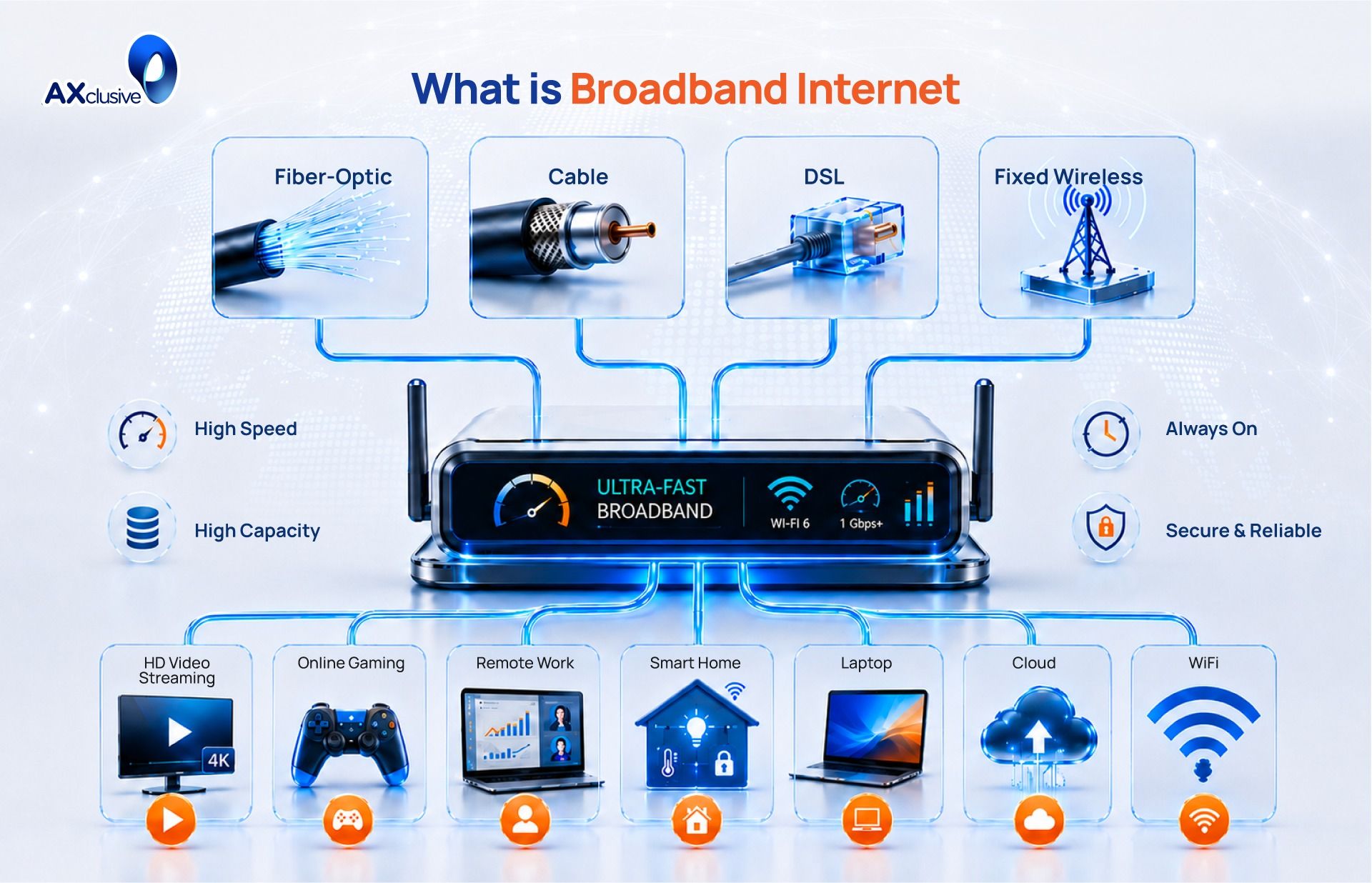
Broadband internet is a general term used to describe high-speed internet access. The word itself is derived from broad bandwidth, which highlights the network's capacity to transmit massive amounts of data simultaneously. Unlike the outdated dial-up systems of the past, broadband provides an always-on connection, meaning you have instant access to the web without needing to dial in.
Since becoming the standard in the early 2000s, this technology has evolved into several formats, including fiber-optic, cable, DSL, and fixed wireless. Today, high-speed broadband is no longer a luxury but an absolute necessity for seamless online activities, such as streaming high-definition videos, playing competitive multiplayer games, and working remotely.
How Broadband Internet Technology Works
Broadband internet operates by utilizing a dedicated line used exclusively for data transmission, eliminating the need to tie up phone lines like older dial-up connections. To bring this internet access directly to your home or business, an Internet Service Provider (ISP) constructs and maintains a sophisticated physical network. This infrastructure consists of specialized equipment—including data cables, network switches, routers, and host computers working together to ensure a continuous, high-speed data flow.
Popular Types of Broadband Internet
Today’s broadband landscape offers several ways to get connected, depending on your geographic location and speed requirements. The most common technologies rely on distinct wired and wireless infrastructures.
DSL Connection Options
Digital Subscriber Line (DSL) remains a widely used broadband format. It operates through traditional copper telephone wires. Because DSL data travels on entirely different frequencies than voice calls, you can actively use the internet and your landline phone at the same time. Typical DSL connection speeds can reach up to 100 Mbps.
Bonded Line Technology
Often referred to as pair bonding, this technology is a direct upgrade to standard DSL service. While a regular DSL connection uses a single pair of copper wires (two wires), bonded lines utilize two pairs (four wires). This infrastructure essentially doubles your bandwidth capacity, pushing internet speeds up to 140 Mbps in supported areas.
Fiber-Optic Network Service
Fiber-optic is currently the highest-performing broadband technology available. It transmits data as rapid pulses of light through microscopic fiber strands. Because information travels as light, fiber provides an incredibly reliable, low-latency connection. In select areas with advanced infrastructure, fiber networks can deliver exceptional speeds of up to 10 Gbps.
Cable-Based Internet Access
Cable internet utilizes the existing coaxial cable networks originally built to deliver television services. By connecting a specialized cable modem to these lines, users gain robust internet access. Performance varies by location, but cable internet speeds generally peak at around 940 Mbps for downloading and up to 50 Mbps for uploading.
Fixed Wireless and Satellite Connections
For rural or remote areas lacking wired infrastructure (such as fiber, cable, or DSL), wireless solutions are the primary choice for broadband access:
- Fixed Wireless (4G/5G LTE): Often provided in partnership with cellular carriers, this service uses cell tower signals to deliver high-speed home internet.
- Satellite Internet: By bouncing data off satellites orbiting the Earth, this technology provides connectivity virtually anywhere in the world. Users can typically expect download speeds ranging from 25 Mbps to 100 Mbps, with average upload speeds around 25 Mbps
Choosing the Right Broadband Internet Speed
Determining your ideal internet speed comes down to two main factors: the types of online activities you engage in and the total number of connected devices in your home (including smartphones, PCs, and smart home tech like security cameras or voice assistants).
To avoid overpaying or dealing with a sluggish connection, here is a general guide to matching internet speeds with your household needs:
- Up to 100 Mbps (Best for Small Households): A budget-friendly option ideal for 1 to 2 users. It provides reliable bandwidth for standard web browsing, checking emails, basic video streaming, and everyday remote work or online learning.
- Up to 500 Mbps (Best for Moderate Use): Perfect for homes with multiple active users and devices. This tier seamlessly supports HD video streaming, faster uploads and downloads of large files, and smooth operation of interconnected smart home appliances.
- Up to 1 Gigabit (Best for Power Users): Built for heavy, simultaneous usage. A 1 Gig (1000 Mbps) connection easily handles bandwidth-heavy tasks like 4K/8K streaming, competitive online gaming, Virtual Reality (VR), and massive file transfers without lagging.
Advantages of Broadband Internet
High-speed broadband has fundamentally transformed digital connectivity, offering the consistency and power needed to support modern lifestyles. By upgrading to a robust broadband connection, users experience several key benefits:
- Rapid Data Processing: Enables lightning-fast file downloads and makes everyday web browsing highly efficient.
- Buffer-Free Entertainment: Delivers the stable bandwidth required for uninterrupted HD video streaming and smooth, lag-free competitive gaming.
- Simultaneous Device Support: Allows households to connect multiple smartphones, computers, and smart home tech (like 4K TVs and voice assistants) at the same time without network congestion.
- Productive Remote Work: Provides the robust connection necessary to run heavy software, seamless video conferencing, and real-time collaboration tools.
- Expanded Educational Access: Opens the door to virtual classrooms, distance learning, and endless online educational resources for students of all ages.
- Clearer Communication: Ensures high-quality, crystal-clear video calls and instant messaging, making it easier to stay in touch with colleagues and family worldwide.
In conclusion, understanding what is broadband internet helps you make the best choices for your daily online needs. From fast fiber optic lines to flexible wireless connections, this technology provides the reliable speed necessary for streaming, gaming, and remote work. By evaluating your household devices and activities, you can easily select the perfect plan. Axclusive ISP hopes this article has given you a clear overview to help you stay connected effortlessly.
What is broadband internet and how it supports fast, reliable connectivity for homes and businesses. Contact us to find the right broadband solution with Axclusive ISP.