
What Is an Internet Exchange Point? Key Benefits of IXPs
To ensure high speed connectivity and seamless streaming, massive global networks must constantly share data with one another. They achieve this efficiently by meeting at an internet exchange point. By connecting at these physical hubs, companies drastically reduce latency and lower their transit costs. Join Axclusive in the article below as we explore the mechanics and benefits of this critical networking infrastructure.
What is an internet exchange point in networking ?
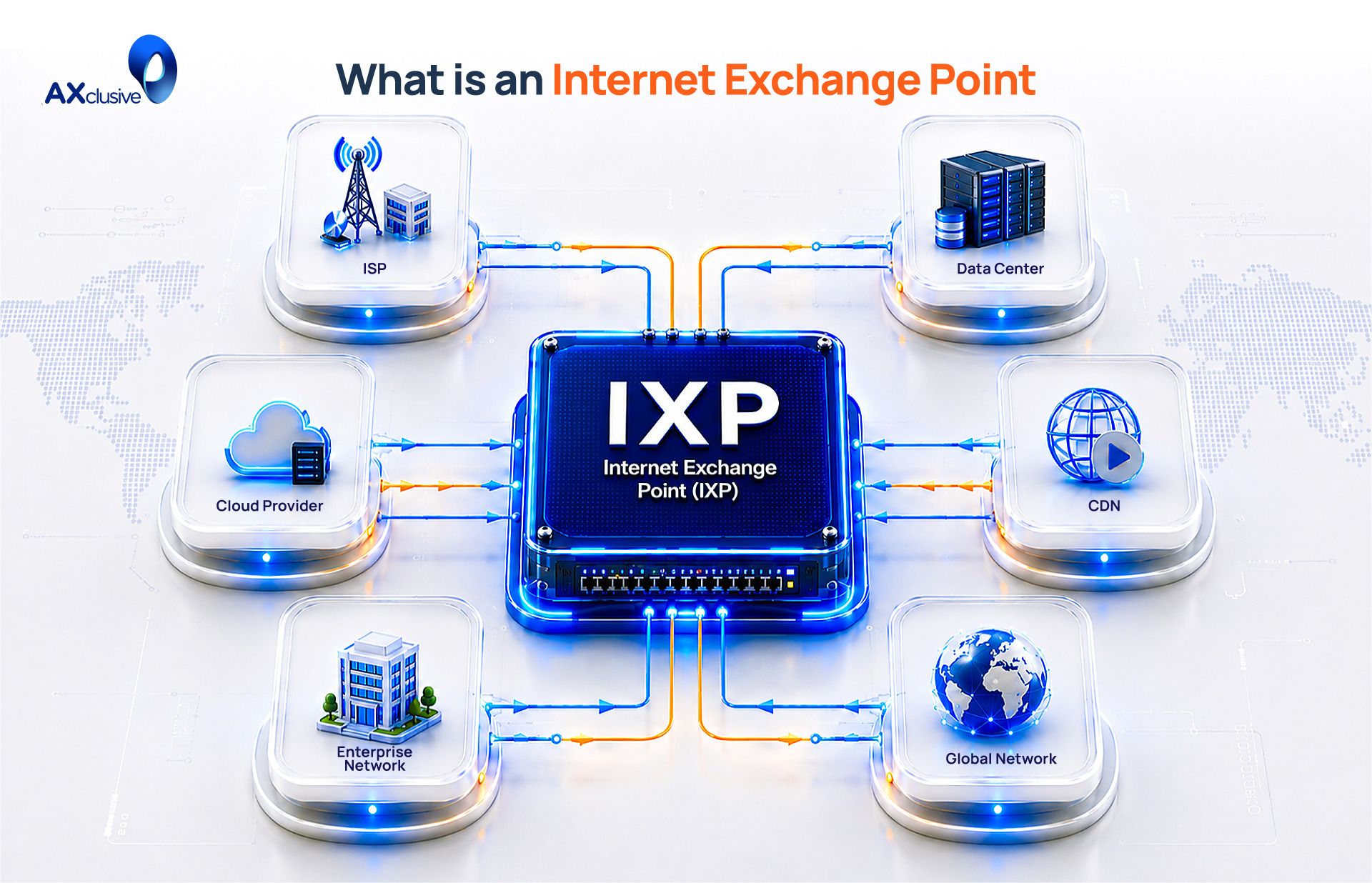
An Internet Exchange Point (IXP) is a physical network facility where Internet Service Providers (ISPs), content providers, CDNs, and other network operators directly exchange Internet traffic. Instead of routing traffic through third-party transit providers, participating networks can connect and exchange data more efficiently. This helps shorten network routes, reduce latency, improve overall network performance, and potentially lower Internet transit costs.
How an internet exchange point routes network traffic
An Internet Exchange Point (IXP) routes network traffic by providing a shared infrastructure where independent networks can connect and exchange data directly. ISPs, content providers, CDNs, cloud platforms, and other network operators connect their routers to the IXP’s switching infrastructure, creating a common environment for efficient traffic exchange.
When data needs to travel from one participating network to another, the networks use BGP (Border Gateway Protocol) to determine which routes are available and where traffic should be sent. Instead of sending the data through an upstream transit provider or along a longer external route, traffic can pass directly between networks connected to the same exchange point.
This process, known as peering, can shorten the distance that Internet traffic needs to travel. As a result, an IXP can help reduce network latency, improve routing efficiency, and decrease dependence on paid IP transit. For businesses and service providers, these more direct network paths can contribute to faster and more consistent connectivity between users, applications, and online services.
Key Benefits of Internet Exchange Points
Internet Exchange Points (IXPs) help networks exchange traffic more efficiently by creating direct connections between participating network operators. Key benefits include:
- Lower Network Latency: IXPs shorten the path between networks, allowing data to reach its destination faster. This is particularly valuable for latency-sensitive services such as cloud applications, VoIP, video streaming, and online gaming.
- Reduced IP Transit Costs: Direct peering at an IXP can reduce reliance on paid upstream transit providers, helping ISPs and network operators manage bandwidth and connectivity costs more efficiently.
- Improved Network Resilience: Access to multiple interconnected networks provides additional routing options. If one route becomes unavailable or congested, traffic may be redirected through alternative paths.
- Greater Network Scalability: IXPs provide an efficient interconnection environment that allows network operators to accommodate growing traffic volumes and establish additional peering relationships as demand increases.
- More Efficient Local Traffic Exchange: Local networks can exchange traffic within the same market instead of unnecessarily routing data through distant or international networks. This helps improve local connectivity while reducing pressure on international bandwidth.
Different types of internet exchange point infrastructure
While all of these facilities serve the core purpose of routing data directly between networks, they are structured differently based on accessibility and geographical reach. Understanding these operational models is key to building an efficient digital strategy.
The infrastructure generally falls into three primary categories:
- Public Facilities: These hubs operate on an open participation model. Often run by non profit organizations, they offer a neutral and highly cost effective environment where any network operator or Internet Service Provider, regardless of size, can connect and share traffic freely.
- Private Facilities: Unlike public hubs, these networks are highly exclusive. They are strictly managed by a single corporate entity and restrict access to a very specific, pre approved group of network operators.
- Regional Facilities: Designed to serve a highly localized area such as a specific city, state, or country, these hubs focus entirely on optimizing local data routes. By keeping domestic traffic within the region, they dramatically boost the speed and performance of local internet services.
Why internet exchange point connectivity matters
Connecting directly to these localized infrastructure hubs is not just a matter of convenience. It is a strategic technical decision that fundamentally enhances how digital platforms operate and deliver content to end users.
Lower latency
Every time data has to jump between multiple transit providers, it experiences delays. By plugging directly into a shared hub, networks bypass these unnecessary stops and create the shortest physical path possible. This direct connection dramatically increases speed and guarantees the highly responsive performance required for real time applications and massive content delivery networks.
Reduced operational expenses
Moving massive amounts of data across the global web is incredibly expensive. Instead of paying hefty fees to third party carriers to deliver traffic, participating companies can simply hand off their data directly to other networks within the facility. For organizations that process high traffic volumes daily, this direct peering method results in massive financial savings over time.
Stronger network reliability
Relying on a single transit route is a major security risk. By connecting to an exchange facility, organizations instantly gain access to numerous alternative data paths. If one specific connection drops or suffers from heavy congestion, the network can instantly reroute traffic through a different peer in the same building, ensuring total service continuity without disrupting the user experience.
From a purely architectural standpoint, utilizing an internet exchange point is mandatory for optimizing Layer 2 routing and achieving maximum network efficiency. By establishing a physical presence in these carrier neutral data centers, network operators successfully bypass legacy transit providers, drastically lowering latency and securing redundant data paths. Axclusive ISP hopes this technical breakdown provides the exact blueprint your engineering team needs to enhance enterprise connectivity
Internet Exchange Points improve network speed, reduce latency, and enhance connectivity between networks. Contact us to optimize your network performance with Axclusive ISP.